






Correct option is C
The correct answer is: (C) Late blight of potato
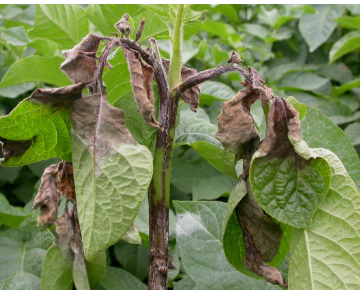
The Great Irish Famine (1845–46) was caused by the late blight of potato, a disease caused by the pathogen Phytophthora infestans.
The famine occurred because potatoes were the staple food for a large portion of the Irish population, and the disease destroyed nearly the entire potato crop.
Phytophthora infestans thrives in cool, moist conditions and spreads rapidly through spores carried by wind and water.
The famine led to widespread starvation, causing the deaths of over 1 million people and forcing another million to migrate, mainly to the United States and Canada.
Information Booster:
Causal organism: Phytophthora infestans (Oomycete pathogen).
Symptoms:
Dark water-soaked lesions on leaves.
White moldy growth under humid conditions.
Rotting of tubers in the soil or storage.
Knowledge Booster:
(A) Early blight of potato: Caused by Alternaria solani (fungus). Symptoms: Brown concentric rings on leaves leading to premature defoliation.
(B) Brown rot of potato: Caused by Ralstonia solanacearum (bacterium). Affects vascular system, causing wilting and tuber decay. Major problem in warm tropical regions but not responsible for the Irish Famine.
(D) Rice blast: Caused by Magnaporthe oryzae (fungus). Affects rice, not potatoes. Leads to lesions on leaves, stems, and grains, causing significant yield loss.
 English
 100 Questions
 100 Marks
 120 Mins


