Correct option is A
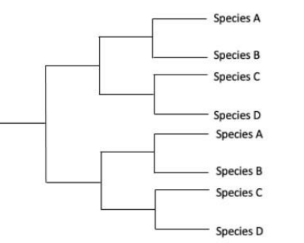
Gene duplication is a process in which a segment of DNA is copied, resulting in two identical or nearly identical copies of a gene within the genome. This can lead to the emergence of new functions or the retention of the original function, depending on evolutionary pressures.
The tree likely indicates that species A, B, C, and D share common ancestors, suggesting they might have diverged from a common lineage through evolutionary processes, including gene duplication.
As the duplicated genes accumulate mutations, they can lead to functional divergence, where one copy may retain the original function, while the other might acquire new functions beneficial for the species.
Other Options:
Horizontal gene transfer (HGT) refers to the transfer of genetic material between organisms through mechanisms other than reproduction (such as transformation, transduction, or conjugation). HGT is more common in prokaryotes and certain eukaryotes but does not typically explain the branching patterns seen in a phylogenetic tree constructed from a linear evolution model.
Hybridization occurs when two different species interbreed, producing hybrid offspring that may carry traits from both parent species. While hybridization can create new species or introduce genetic variation, it usually results in a more complex branching pattern. The phylogenetic tree indicates divergence from common ancestors rather than the merging of distinct lineages.
Genome rearrangement refers to large-scale alterations in the structure of the genome, such as inversions, duplications, deletions, and translocations of segments of DNA. The tree indicates a lineage of divergence over time rather than the structural changes within genomes that would typically not show clear ancestral relationships.