






Correct option is A
The correct answer is (a) No role of bacteria, caused by a virus
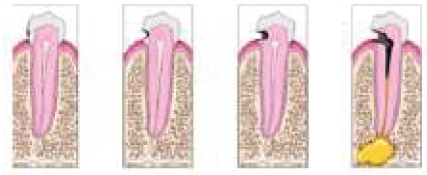
Explanation: The gradual decay of a tooth, often referred to as dental caries or tooth decay, occurs in distinct stages as the tooth undergoes progressive damage from bacterial activity and it is not caused by virus.
Information Booster:
The tooth decay typically begins when bacteria in the mouth feed on food particles, especially sugars, producing acids that erode tooth enamel. Let's break down the different stages of tooth decay:
1. Initial Demineralization (Early Stage)
- Description: In the earliest stage of tooth decay, the enamel, which is the hard outer layer of the tooth, begins to lose minerals. This process is known as demineralization.
- Causes: The acids produced by bacteria after consuming sugars dissolve minerals (mainly calcium and phosphate) in the enamel, making it weaker.
- Signs: At this stage, you might not notice any pain, but the enamel starts to appear chalky or white in certain areas. This is due to the loss of mineral content.
- Reversibility: This stage is reversible with proper oral hygiene, fluoride treatments, and a reduction in sugar intake. Fluoride can help remineralize the enamel, restoring its strength.
2. Enamel Decay (Cavity Formation)
- Description: If demineralization continues without intervention, it can lead to the formation of a cavity (a small hole or soft spot) in the enamel. This is the second stage of decay.
- Causes: The acidic environment created by bacteria continues to break down the enamel, creating a visible cavity or hole. At this stage, the enamel no longer has the strength to protect the inner layers of the tooth.
- Signs: You may start to experience sensitivity, especially when eating hot, cold, or sweet foods. The enamel may look discolored, and a small visible hole may form.
- Reversibility: Once a cavity has formed, it is no longer reversible, and professional dental treatment, such as fillings, is required to restore the tooth.
3. Dentin Decay (Progression to Inner Layers)
- Description: As the decay progresses, it penetrates deeper into the tooth, reaching the dentin. Dentin is the softer, yellowish layer beneath the enamel, and it is more sensitive to stimuli like temperature and pressure.
- Causes: The acids and bacteria continue to break down the tooth, now affecting the dentin, which is less mineralized than enamel and more prone to decay.
- Signs: Increased pain or sensitivity to hot, cold, or sweet stimuli may be felt. At this stage, the cavity can be quite deep, and you might also experience discomfort when chewing.
- Treatment: Dentists will typically remove the decayed dentin and replace it with a filling material. If the decay is extensive, a crown or root canal may be necessary.
4. Pulp Involvement (Infection of the Tooth Nerve)
- Description: In this advanced stage, the decay reaches the pulp of the tooth, which contains nerves and blood vessels. When bacteria invade the pulp, an infection can occur, leading to an abscess or tooth infection.
- Causes: The bacteria can reach the pulp through the cavity or cracks in the tooth. As the infection spreads, it can lead to severe pain, swelling, and sensitivity.
- Signs: Severe, throbbing pain that may worsen when lying down or at night. There may be visible swelling in the gums near the affected tooth, and pus might drain from the area. The tooth may become discolored.
- Treatment: A root canal procedure is often required to remove the infected pulp and seal the tooth. If left untreated, the infection can lead to tooth abscesses and potentially result in the loss of the tooth.
5. Abscess and Tooth Loss
- Description: If the infection in the pulp is not treated, it can spread to the surrounding tissues, causing an abscess to form at the root tip. An abscess is a pocket of pus caused by bacterial infection.
- Causes: The untreated infection in the pulp leads to the formation of an abscess, which can cause bone loss and severe pain.
- Signs: Intense pain, swelling, fever, and possibly a bad taste in the mouth due to pus draining from the abscess. The tooth may become loose or shift.
- Treatment: The abscess is often treated with antibiotics to control the infection, followed by root canal therapy or, in severe cases, tooth extraction. If the tooth becomes severely damaged and cannot be saved, it may need to be extracted.
 English
 100 Questions
 100 Marks
 90 Mins


