
Correct option is A
The correct answer is (A) Crotalaria juncea and Tephrosia purpurea
Explanation:
• Green manuring is the practice of growing succulent leafy crops and plowing them into the soil to improve fertility and organic matter content.
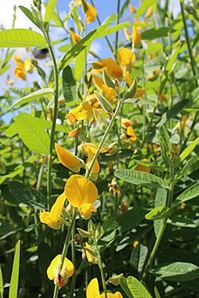
• Crotalaria juncea (Sunnhemp) is one of the most popular green manure crops in India. It is highly valued for its rapid growth, high nitrogen fixation, and its ability to tolerate moderate drought conditions.
• Tephrosia purpurea (Wild Indigo/Dhanicha) is exceptionally drought-tolerant and can grow in poor, sandy soils where other green manures might fail.
• These crops are leguminous, meaning they form a symbiotic relationship with Rhizobium bacteria to fix atmospheric nitrogen into the soil.
Information Booster:
• Sunnhemp adds about $75-100 kg N/ha$ to the soil when incorporated at the right stage (pre-flowering).
• Dhaincha (Sesbania aculeata) is another common green manure, but it is better suited to waterlogged or saline-sodic soils rather than extreme drought.
• Green manuring improves soil structure, water-holding capacity, and microbial activity.
Additional Knowledge:
• Trifolium alexandrinum (Berseem): A winter fodder crop that requires significant irrigation.
• Cyamopsis tetragonoloba (Guar): While drought-tolerant, it is primarily grown for its gum and beans rather than as a primary green manure like Sunnhemp.
• Lens culinaris (Lentil): A pulse crop rather than a dedicated green manure crop.
 English
 100 Questions
 125 Marks
 80 Mins


