






Correct option is B
The correct answer is: (B) Cactoblastis cactorum
Explanation:
The prickly pear cactus (Opuntia spp.) became an invasive species in Australia, covering millions of hectares of land and severely impacting agriculture.
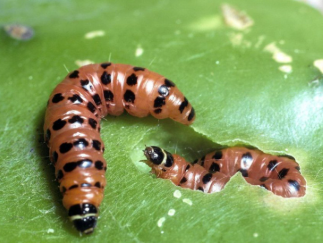
To control its rapid spread, the moth borer Cactoblastis cactorum was introduced as a biological control agent in the 1920s.
The larvae of this moth burrow into the cactus pads, causing extensive damage and effectively reducing its population.
Important Points:
Opuntia spp. (prickly pear cactus) became a major invasive problem in Australia.
Cactoblastis cactorum is a moth borer introduced to control the cactus population.
The larvae feed on the cactus pads, leading to their destruction.
This is regarded as one of the most successful biological control efforts globally.
Knowledge Booster (Other Options Information):
Tyria jacobaeae: Also known as the cinnabar moth, it is used to control ragwort (Senecio jacobaea).
Chrysomyia spp.: Includes blowflies, which are pests rather than biological control agents. They are known for causing myiasis in livestock.
Longitarsus jacobaeae: A type of flea beetle used to control ragwort (Senecio jacobaea).
 English
 100 Questions
 100 Marks
 120 Mins


