






Correct option is C
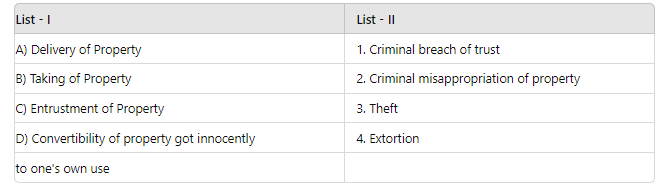
Theft under Section 378 of the IPC requires the dishonest intention to take any movable property out of the possession of another person without their consent. The essential element of theft is that the property taken must be movable. Immovable property, such as land or buildings, cannot be subject to theft under the IPC.
Information Booster: The definition of theft under the IPC specifically applies to movable property. The term "movable property" includes any tangible object that can be moved from one place to another. The intent behind the act must be dishonest, meaning the taker intends to permanently deprive the owner of their property. The distinction between movable and immovable property is crucial because different legal provisions govern the unlawful appropriation of immovable property.
Additional Knowledge:
·
Any kind of property (a): This is incorrect because theft applies only to movable property, not all kinds of property.
·
Valuable security (b): This is incorrect as theft is broader and includes any movable property, not just valuable security.
·
Only immovable property (d): Immovable property is excluded from the definition of theft under IPC.
 Codes :


