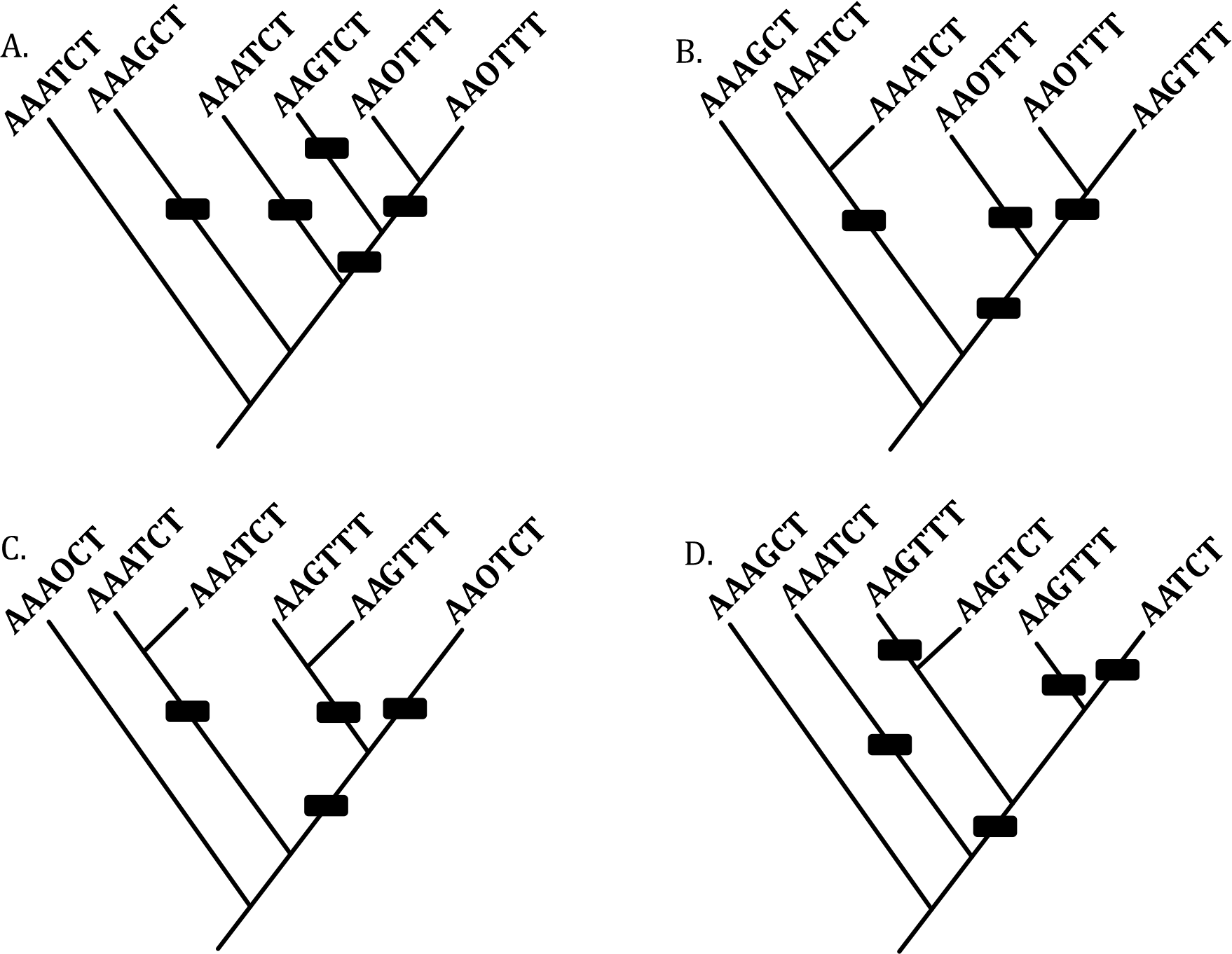
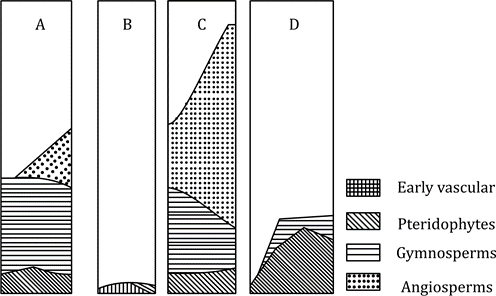
Correct option is D
Phylogenetic trees are used primarily to examine the evolutionary relationships between species, their common ancestry, and the functional significance of traits. Let’s analyze each statement carefully:
(A) Relatedness among different populations, species, or genera – Correct
Phylogenetic trees visually represent evolutionary relationships, showing how closely related different species, populations, or genera are. The branching patterns reflect evolutionary divergence.(B) Similarity in characters among different populations, species, or genera – Incorrect
Phylogenetic trees are not directly built on character similarity but on evolutionary lineage. While characters may be used to infer relationships, mere similarity does not establish evolutionary connections.(C) Common ancestry among different populations, species, or genera – Correct
One of the fundamental purposes of a phylogenetic tree is to trace back to common ancestors, helping to understand how different species have evolved.(D) Functional significance of traits in populations, species, or genera – Correct
Phylogenetic analysis can help in studying functional adaptations and how certain traits evolved over time in different lineages.
Thus, the most appropriate combination is A, C, and D.
Information Booster
- Definition: A phylogenetic tree is a branching diagram that represents evolutionary relationships among species based on shared ancestry.
- Common Ancestry: It helps trace how species evolved from a common ancestor over millions of years.
- Cladistics Approach: Phylogenetic trees use cladistics, which categorizes organisms based on shared derived characteristics.
- Molecular Data Integration: Modern phylogenetic trees often incorporate genetic data (DNA, RNA, or proteins) to determine evolutionary relationships.
- Evolutionary Divergence: The length of branches in a phylogenetic tree can indicate the time since two species diverged.
- Application in Biology: Used in taxonomy, conservation biology, medicine (e.g., tracing disease evolution), and paleontology.
- Monophyletic Groups: Helps in classifying organisms into groups based on complete ancestral lineage, rather than just superficial similarities.