Correct option is C
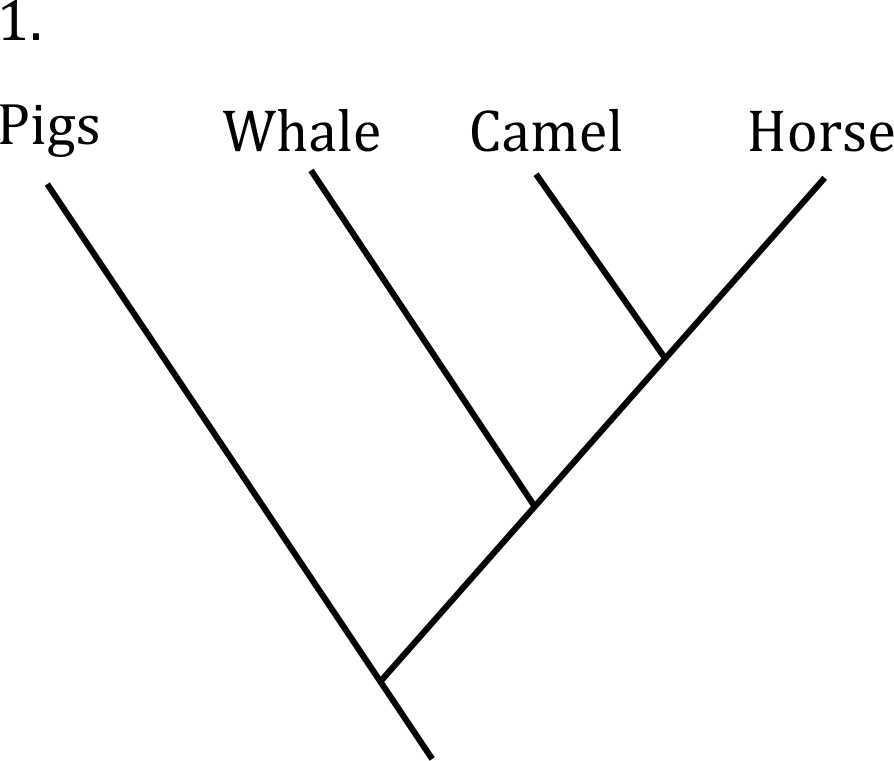
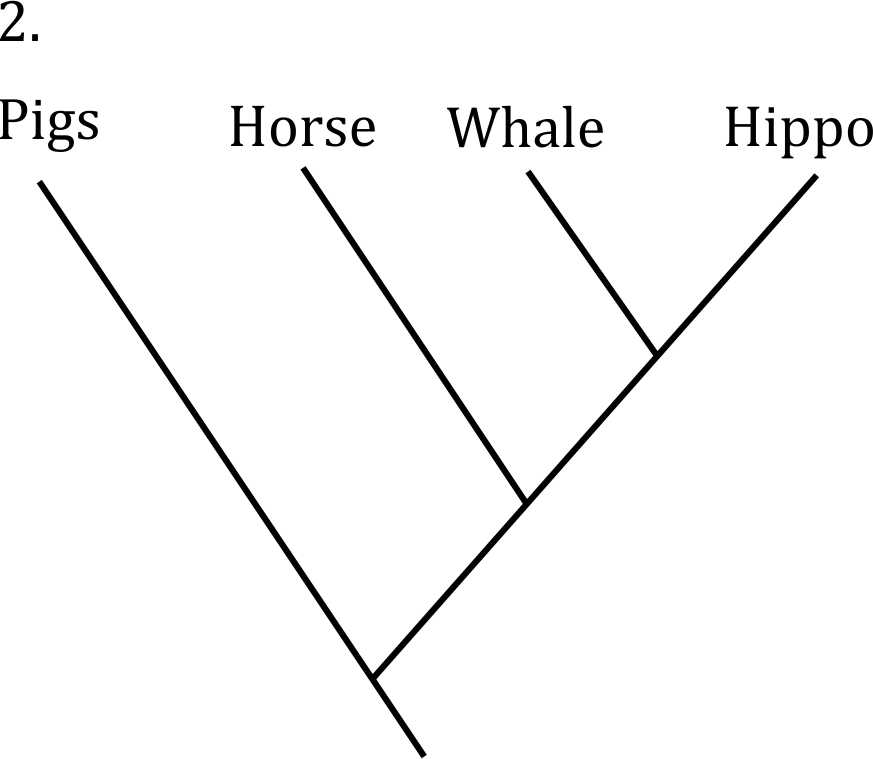
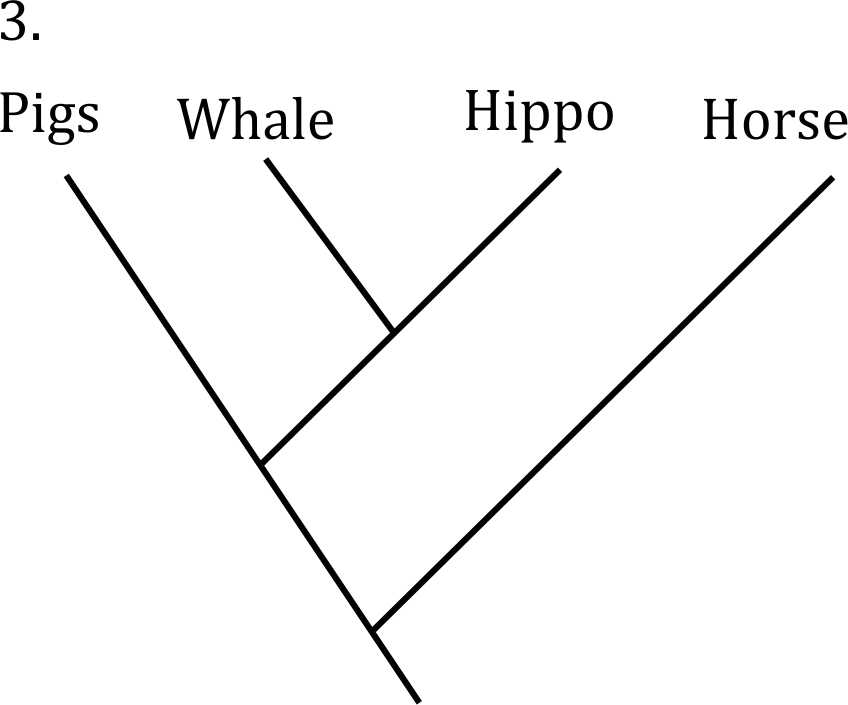
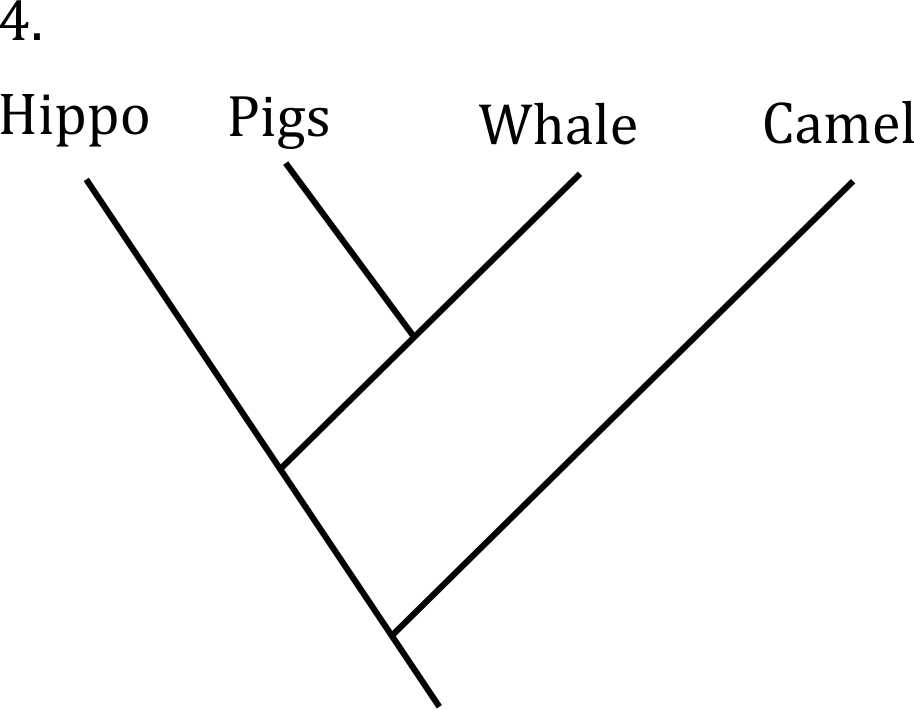
Molecular phylogeny suggests that whales are most closely related to artiodactyls, a group that includes animals like pigs, camels, and hippos. Among these, the hippo is considered to be the closest modern relative of whales. The correct tree is the one that places hippos and whales as sister groups, with pigs and other terrestrial mammals (like horses) branching off separately.
- Option 3 correctly places hippos and whales as sister groups (closely related).
- Option 1 and Option 2 place unrelated animals together or don't reflect the correct evolutionary relationships based on molecular evidence.
- Option 4 misplaces the relationships by grouping camels incorrectly with whales.
Information Booster:
- Artiodactyls: This group of mammals includes animals that have an even number of toes, such as pigs, camels, and hippos. Whales are considered to be part of this group based on molecular evidence, despite their aquatic nature.
- Phylogenetic Trees: These diagrams show evolutionary relationships based on shared ancestry. The closer two species are on the tree, the more closely related they are in evolutionary terms.
- Whales and Hippos: Molecular studies have shown that whales share a most recent common ancestor with hippos, which is a surprising finding given their very different lifestyles.
- Evolutionary Divergence: While camels, pigs, and horses are all artiodactyls, they diverged from the lineage that gave rise to modern whales and hippos millions of years ago.
- Molecular Phylogeny: Advances in molecular biology, including DNA sequencing, have significantly changed our understanding of the relationships between modern animals. These methods reveal hidden connections not easily seen in the fossil record.