






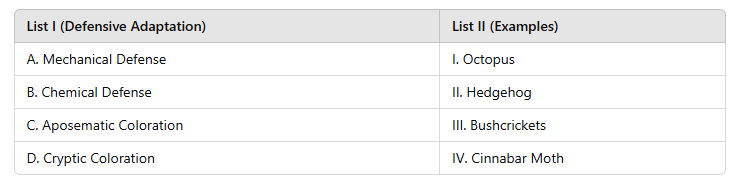
Correct option is B
1.
A. Mechanical Defense (II - Hedgehog): Mechanical defenses include physical structures like spines or shells to deter predators. Hedgehogs use their spines for protection, making them a classic example of mechanical defense.
2.
B. Chemical Defense (I - Octopus): Chemical defenses involve producing toxic or noxious substances to deter predators. Octopuses release ink to confuse predators, a form of chemical defense.
3.
C. Aposematic Coloration (IV - Cinnabar Moth): Aposematic coloration refers to bright and warning colors that signal toxicity or unpalatability. Cinnabar moths display bright red and black patterns, warning predators of their toxicity.
4.
D. Cryptic Coloration (III - Bushcrickets): Cryptic coloration helps organisms blend into their environment to avoid detection. Bushcrickets use camouflage to avoid predators.
Key Explanation: · Mechanical Defense (A): Physical adaptations like spines, shells, or thick skin act as a first line of defense against predators.
· Chemical Defense (B): Use of chemical substances to repel or harm predators, common in insects, amphibians, and cephalopods.
· Aposematic Coloration (C): Bright warning colors signal predators to stay away due to potential toxicity.
· Cryptic Coloration (D): Camouflage allows organisms to avoid being seen, reducing predation risk.
Information Booster: 1. Mechanical Defense: Includes adaptations like spines (hedgehogs), shells (turtles), or tough exoskeletons (beetles).
2. Chemical Defense: Examples include ink release (octopus), venom (snakes), and secretions (poison dart frogs).
3. Aposematic Coloration: Common in butterflies, frogs, and moths that advertise toxicity through vivid patterns.
4. Cryptic Coloration: Widely used by insects, reptiles, and birds to blend into their habitats.
Additional Knowledge: · Hedgehogs (A): Use spines to physically deter predators. Rolling into a ball exposes only the spiny exterior.
· Octopus (B): Ejects ink as a chemical defense to obscure predators' vision and facilitate escape.
· Cinnabar Moth (C): Contains alkaloids that make it toxic; its bright coloration warns predators.
· Bushcrickets (D): Their green or brown coloration helps them mimic leaves or twigs, making them nearly invisible in their environment.
 English
 10 Questions
 20 Marks
 12 Mins


