






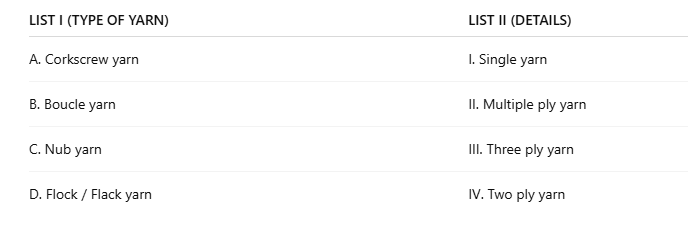
Correct option is A
Corkscrew yarn (A) is a special type of yarn created by twisting two single yarns around each other in a spiral or corkscrew shape. This twisting gives the yarn a springy texture and elasticity. Because it is made by twisting two single yarns together, it is classified as a
two-ply yarn (IV).
Boucle yarn (B) is characterized by loops or curls along its length, producing a textured, bumpy surface. This effect is generally created by combining three yarns twisted together, where one yarn forms the loops while the others provide strength and support. Therefore, boucle yarn is best described as a
three-ply yarn (III).
Nub yarn (C) contains thick, knotted sections called "nubs" or "slubs" that add texture and interest to fabric. These nubs are formed by twisting multiple yarns together unevenly, causing thick spots. Hence, nub yarn is a
multiple ply yarn (II) since it involves more than two yarns twisted together.
Flock or Flack yarn (D) is a yarn where short fibers or "flocks" are attached to a base yarn, giving it a fuzzy or fluffy appearance. Unlike the other yarns that are formed by twisting multiple yarns, flock yarn is essentially a
single yarn (I) with added surface fibers.
Information Booster
Understanding yarn types is fundamental in textile manufacturing, as yarn structure greatly affects fabric properties such as texture, strength, durability, and aesthetics:
·
Corkscrew yarns provide elasticity and are often used in fabrics requiring stretch or unique textures, such as knitwear.
·
Boucle yarns are popular in fashion textiles for their decorative looped texture, adding depth and interest to fabrics like boucle jackets or upholstery.
·
Nub yarns create distinctive fabrics with slubby texture and are favored for casual or rustic looks.
·
Flock yarns provide softness and a fuzzy surface, ideal for plush or warm fabrics.
 English
 10 Questions
 20 Marks
 12 Mins


