
Correct option is B
The scientific method is defined by a set of rigorous principles that ensure findings are objective, verifiable, and logical; the correct matching is
Replicability to Independent results, Precision to Consistent measurements, Falsifiability to Being proven wrong, and Parsimony to Simple explanations.
Information Booster
·
Replicability (A – II): This is the "acid test" of science. It means that if another
independent researcher follows the same procedures and methods under similar conditions, they should arrive at the
same results. It ensures that findings are not just a "one-time" fluke.
·
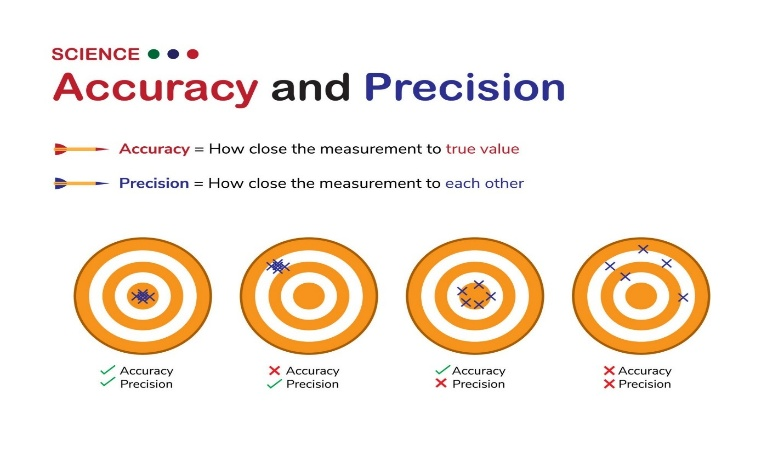
Precision (B – IV): In a scientific context, precision refers to the
consistency and reproducibility of measurements. It describes
how close multiple measurements of the same item are to each other. Even if the measurements are not "accurate" (close to the true target), they are "precise" if they are consistently clustered together.
·
Falsifiability (C – I): Proposed by
Karl Popper, this principle states that a statement or hypothesis is only scientific if it is possible to conceive of an observation or an argument which could
prove it wrong. If a theory cannot be tested or refuted, it falls into the realm of pseudoscience.
·
Parsimony (D – III): Also known as
Occam’s Razor, this principle dictates that when a researcher has multiple competing hypotheses that explain a phenomenon equally well, they should
select the simplest explanation—the one that makes the fewest unnecessary assumptions.
Additional Knowledge
Understanding why these attributes are distinct helps in mastering research methodology:
·
Precision vs. Accuracy: While precision (IV) focuses on the
closeness of measurements to each other, accuracy focuses on how close a measurement is to the
actual or "true" value. A scale that always weighs you as 5kg lighter is
precise (consistent) but not
accurate.
·
Logical Positivism vs. Falsifiability: Earlier scientists believed in "Verification" (proving things true). However, science shifted to
Falsifiability because you can never observe every single instance to prove a universal truth (e.g., "All swans are white"), but you only need to find
one black swan to disprove it.
·
Parsimony in Educational Models: When explaining student behavior, if "lack of sleep" (simple) explains a drop in grades as well as "complex subconscious trauma" (complex), the principle of parsimony directs us to investigate the
simpler cause first.
 English
 10 Questions
 20 Marks
 12 Mins


