






Correct option is B
1.
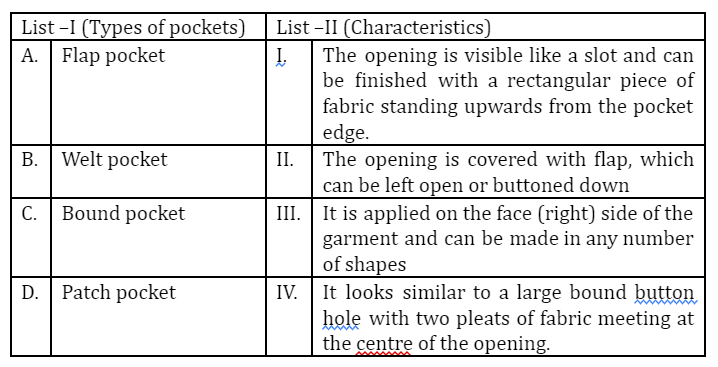
(A) Flap pocket → (II) The opening is covered with a flap, which can be left open or buttoned down
· A
flap pocket is characterized by a flap of fabric that covers the pocket opening. This flap can either be left open or secured with a button, adding both functionality and style to garments.
2.
(B) Welt pocket → (I) The opening is visible like a slot and can be finished with a rectangular piece of fabric standing upwards from the pocket edge
· A
welt pocket has a visible opening that looks like a slit or slot in the fabric. It often features a strip of fabric (welt) around the opening, giving it a neat and formal appearance, commonly found in suits and jackets.
3.
(C) Bound pocket → (IV) It looks similar to a large bound buttonhole with two pleats of fabric meeting at the center of the opening
· A
bound pocket is a more decorative style where the pocket opening resembles a large bound buttonhole, with pleats or folds of fabric that meet in the center, giving it a clean and professional finish.
4.
(D) Patch pocket → (III) It is applied on the face (right) side of the garment and can be made in any number of shapes
· A
patch pocket is sewn directly onto the surface of a garment and can take various shapes, such as square, rectangular, or rounded. This type of pocket is visible and is often used for casual wear, such as on shirts or jackets.
Information Booster:
Different types of pockets serve both decorative and functional purposes in garments. Understanding their characteristics helps in selecting the right pocket style for various fashion designs.
·
Flap Pockets: Often used in coats and blazers, providing an elegant look with the option to button or leave open.
·
Welt Pockets: Frequently seen in formal attire, adding a sleek and minimalist appearance.
·
Bound Pockets: Used in high-end garments due to their precise construction and clean lines.
·
Patch Pockets: Common in casual and utility garments, offering versatility in terms of size and shape.
 English
 10 Questions
 20 Marks
 12 Mins


