






Correct option is C
This question refers to the stages of
group development based on
Tuckman's model, which includes
forming,
storming,
norming, and
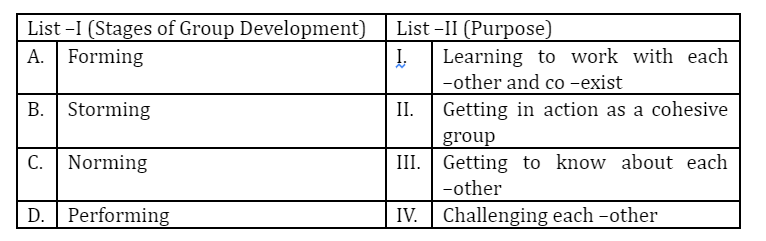
performing. Each stage has a specific purpose and function in group development. Let's explain the stages and the correct matches:
1.
(A) Forming → (III) Getting to know about each other
· The
forming stage is the initial phase where group members come together and begin to understand each other's roles and responsibilities. The primary purpose during this stage is
getting to know each other, as members are typically polite and avoid conflict at this point.
2.
(B) Storming → (IV) Challenging each other
· In the
storming stage, conflicts or disagreements might arise as individuals start to
challenge each other’s ideas, roles, or approaches. It is a necessary phase where members assert their opinions, and some tension may occur before moving towards a more cohesive phase.
3.
(C) Norming → (I) Learning to work with each other and co-exist
· The
norming stage is where the group starts to establish norms and practices. The members begin to
learn to work with each other, cooperate, and
co-exist effectively. Group cohesion strengthens, and conflicts from the storming phase start to resolve.
4.
(D) Performing → (II) Getting in action as a cohesive group
· The
performing stage is when the group becomes fully functional and operates as a
cohesive group. The members are now working efficiently toward their common goals, and their focus is on
getting in action and achieving results.
Information Booster:
Tuckman’s model of
group development highlights the stages that groups go through from initial formation to effective performance. Each stage involves different behaviors and group dynamics, helping members to transition from being a collection of individuals to a well-functioning team.
·
Forming: Characterized by uncertainty as group members start to form relationships.
·
Storming: Conflict and competition arise as individuals express their ideas.
·
Norming: Group norms develop, leading to collaboration and understanding.
·
Performing: The group functions smoothly and focuses on achieving its objectives.
 English
 10 Questions
 20 Marks
 12 Mins


