Correct option is C
1.
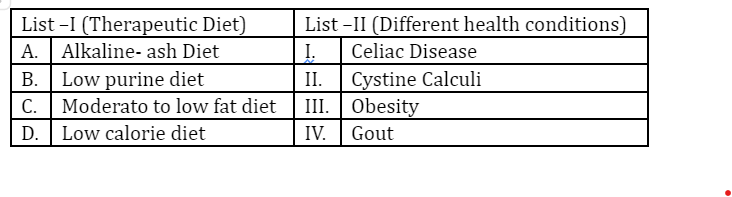
(A) Alkaline-ash Diet –
(II) Cystine Calculi
· The
alkaline-ash diet is used to make the urine more alkaline, which helps in preventing the formation of cystine kidney stones. Cystine calculi (stones) form in acidic urine, so increasing urine pH can help reduce the risk of these stones forming.
2.
(B) Low purine diet –
(IV) Gout
· Gout is caused by elevated levels of uric acid in the blood, which can crystallize in the joints and cause painful flare-ups. A
low purine diet is recommended for individuals with gout to help lower uric acid levels in the body, reducing the likelihood of attacks.
3.
(C) Moderate to low fat diet –
(I) Celiac Disease
· Individuals with celiac disease often struggle with malabsorption issues. A
moderate to low fat diet can help manage symptoms and ensure better digestion of nutrients. While the primary treatment is a gluten-free diet, managing fat intake can also be beneficial, especially in cases where fat malabsorption is present.
4.
(D) Low calorie diet –
(III) Obesity
· A
low calorie diet is commonly prescribed to help manage and reduce
obesity. By reducing the intake of calories, individuals can create a calorie deficit, which is essential for weight loss.
Information Booster:
·
(A) Alkaline-ash Diet → Cystine Calculi: This diet helps in preventing the formation of cystine kidney stones by maintaining an alkaline urine pH.
·
(B) Low purine diet → Gout: A low purine diet helps control uric acid production, which is crucial in preventing gout flare-ups.
·
(C) Moderate to low fat diet → Celiac Disease: Managing fat intake can support individuals with celiac disease who may have trouble absorbing fats due to intestinal damage.
·
(D) Low calorie diet → Obesity: A low calorie diet is key to weight loss and managing obesity.
 English
 10 Questions
 20 Marks
 12 Mins