






Correct option is B
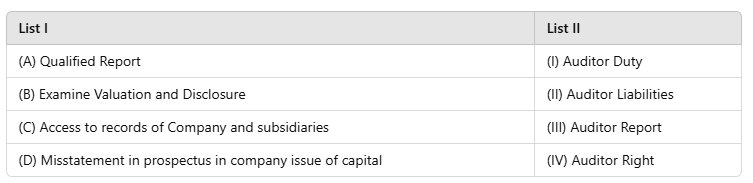
· (A) Qualified Report → (III) Auditor Report: A qualified report is issued when an auditor finds discrepancies in the financial statements but believes they do not invalidate the entire report.
· (B) Examine Valuation and Disclosure → (I) Auditor Duty: Examining valuation and disclosure is part of the auditor's duty to ensure compliance with accounting standards and fair representation of financial data.
· (C) Access to records of Company and subsidiaries → (IV) Auditor Right: Auditors have the legal right to access the company’s and its subsidiaries' records for verification purposes.
· (D) Misstatement in prospectus in company issue of capital → (II) Auditor Liabilities: If a company issues a prospectus with misstatements and it is due to the auditor’s negligence, they may be held liable.
Information Booster:
1. Auditor Report: The auditor prepares a report summarizing findings, including whether financial statements represent a true and fair view.
2. Auditor Rights: Auditors have access to company books, records, and other necessary information to perform their duties effectively.
Additional Knowledge:
1. Auditor Liabilities: Auditors may be held liable for negligence, fraud, or misstatements in financial reports.
2. Qualified Reports: Issued when there are material discrepancies in financial statements, but overall the financial statements are not misleading.
 English
 10 Questions
 20 Marks
 12 Mins


