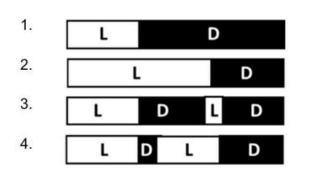
Correct option is C
Explanation:
During photorespiration, the enzymes glycine decarboxylase complex and serine hydroxymethyltransferase play a key role in converting two molecules of glycine into one molecule of serine. This conversion occurs in the mitochondria, where glycine is decarboxylated and converted into serine, a process that is essential for the detoxification of the toxic byproducts of oxygenation of RuBisCO in the Calvin cycle.
Information Booster:
Photorespiration is a process that occurs when RuBisCO fixes oxygen instead of carbon dioxide, leading to the production of 2-phosphoglycolate, a toxic compound.
The mitochondria and peroxisomes work together during photorespiration to detoxify these byproducts, with glycine decarboxylase complex and serine hydroxymethyltransferase functioning in the mitochondria to convert glycine into serine.
The process is vital for recycling and reducing the harmful effects of photorespiration, which occurs under conditions of high oxygen concentration and low carbon dioxide.
Glycine decarboxylase complex catalyzes the decarboxylation of glycine, releasing CO2 and transferring the carbon to form serine, which is then transported out of the mitochondria.
Additional Knowledge:
Endoplasmic reticulum (option 1) is involved in the synthesis of proteins and lipids but is not directly involved in the conversion of glycine to serine during photorespiration.
Chloroplast (option 2) is crucial for photosynthesis but does not directly participate in the conversion of glycine to serine during photorespiration.
Peroxisomes (option 4) work in conjunction with mitochondria during photorespiration, but the conversion of glycine into serine happens primarily in the mitochondria.