Correct option is C
The correct answer is (3) Groucho.
Explanation:
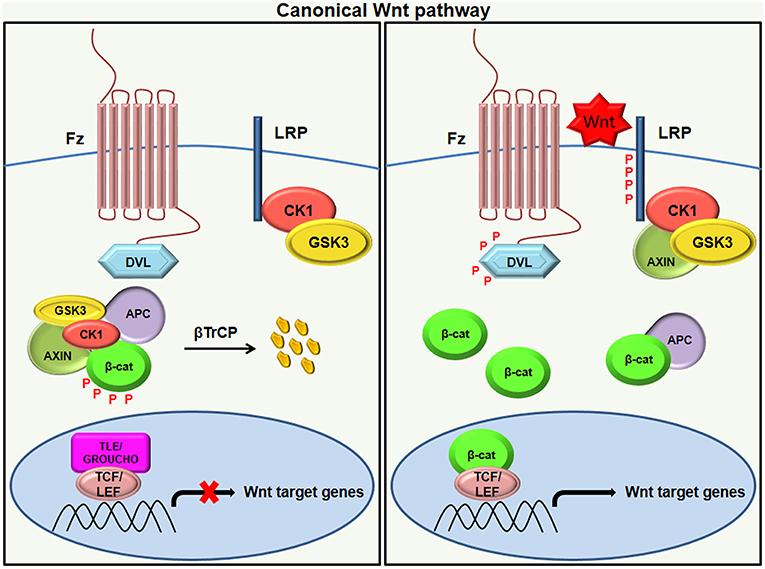
In response to a Wnt signal, β-catenin enters the nucleus and binds to the LEF1/TCF transcription factors, which regulate the expression of target genes. Groucho, a transcriptional repressor, is bound to LEF1/TCF proteins in the absence of β-catenin, preventing transcription. When β-catenin enters the nucleus, it displaces Groucho, allowing LEF1/TCF to activate transcription and thus leading to the expression of Wnt target genes. This displacement is essential for the transcriptional activation in Wnt signaling.
Information Booster:
β-catenin is central to the Wnt signaling pathway, where it translocates to the nucleus after receiving Wnt signals.
LEF1/TCF are transcription factors that bind to β-catenin in the nucleus, activating gene expression.
Groucho is a corepressor that inhibits LEF1/TCF activity by binding to them and preventing transcription.
When β-catenin enters the nucleus, it displaces Groucho, enabling transcriptional activation.
The displacement of Groucho is a critical step in activating genes involved in processes like cell proliferation and differentiation.
The Wnt signaling pathway is fundamental in regulating development, cell growth, and tissue regeneration.
Additional Information:
Option (1) CBP is a coactivator that associates with β-catenin and LEF1/TCF, but it is not displaced by β-catenin during Wnt signaling.
Option (2) GSK3 is a kinase that plays a role in the degradation of β-catenin in the cytoplasm, not in its binding with LEF1/TCF in the nucleus.
Option (4) NEMO is involved in the NF-κB pathway, which is unrelated to the Wnt signaling pathway or its nuclear transcription events.