






Correct option is C
Shear stress distribution in laminar flow b/w stationary plates is given as:
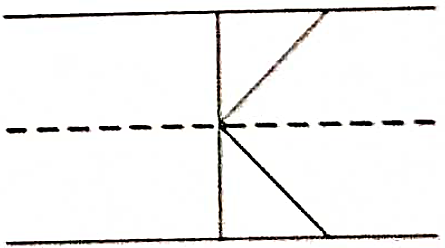
In the case of laminar flow of a fluid between two parallel plates that are both at rest (also known as plane Couette flow), the shear stress distribution has specific characteristics:
Shear Stress in Laminar Flow: In laminar flow between parallel plates, the velocity profile is linear, and the shear stress (τ) varies linearly with the distance from the midplane (the plane equidistant from both plates).
Shear Stress Distribution:
The shear stress is zero at the midplane because the velocity gradient is zero at this point (since the velocity changes direction symmetrically around the midplane).
The shear stress increases linearly as you move away from the midplane towards the plates.
At the plates, the shear stress reaches its maximum value because the velocity gradient is greatest at the boundaries where the fluid velocity is zero (no-slip condition).
This linear variation of shear stress, starting from zero at the midplane and increasing as you move towards the plates, matches the description in option (c).
Therefore, the shear stress distribution is zero at the midplane and varies linearly with distance from the midplane.


