






Correct option is C
The correct answer is (C) Black soil
Explanation:
•
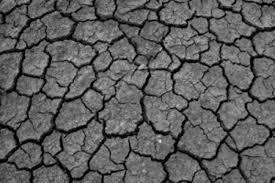
• The figure (referring to the characteristic image of deep wide cracks in dry land) identifies Black Soil, also known as Regur soil or Black Cotton Soil.
• These soils are dominated by Montmorillonite clay minerals, which exhibit high "swell-shrink" properties. When wet, the soil swells and becomes sticky; when dry, it shrinks and develops deep vertical cracks.
• This cracking process is a form of "self-plowing," as surface soil falls into the cracks, helping in the recycling of nutrients and aeration of deep layers.
• Black soils are found primarily in the Deccan Trap region of India, covering parts of Maharashtra, Gujarat, and Madhya Pradesh.
Information Booster:
• Black soils are rich in lime, iron, magnesium, and alumina but generally poor in phosphorus, nitrogen, and organic matter.
• They are excellent for growing cotton, which is why they are called Black Cotton Soils.
• In the USDA soil taxonomy, these soils belong to the order Vertisols (from Latin 'vertere', meaning to turn).
Additional Knowledge:
• Lateritic soil (Option A): Characterized by intense leaching and rich in iron and aluminum oxides; usually reddish and does not form deep cracks.
• Red soil (Option B): Formed from weathering of crystalline rocks; color is due to wide diffusion of iron oxides.
• Acid soil (Option D): Defined by its chemical pH rather than its physical cracking pattern.
 English
 100 Questions
 125 Marks
 80 Mins


