






Correct option is A
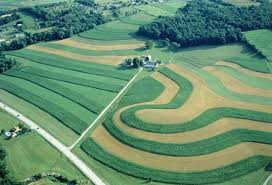
The correct answer is (A) Strip cropping
Explanation:
• Biological or vegetative control of erosion involves the use of plants or plant residues to protect the soil surface.
• Strip cropping is a biological method where erosion-resistant crops (like legumes or grasses) are grown in strips alternating with erosion-permitting crops (like corn or cotton).
• In wind erosion control, these strips are usually laid out perpendicular to the prevailing wind direction to reduce wind velocity at the soil surface and trap moving soil particles.
• It provides a protective cover and increases surface roughness.
Information Booster:
• Wind erosion occurs in three stages: Saltation (bouncing), Suspension (floating in air), and Surface Creep (rolling).
• Other biological methods include shelterbelts (rows of trees), windbreaks, and stubble mulching.
• Critical wind velocity is the minimum wind speed required to start soil movement.
Additional Knowledge:
• Contour bunding (Option B): An engineering or mechanical measure used primarily for water erosion control on slopes by constructing small embankments along the contour.
• Graded bunding (Option C): A mechanical measure used in high rainfall areas to safely dispose of excess runoff while preventing water erosion.
• Ridge and furrow system (Option D): A mechanical cultivation practice used for moisture conservation and drainage, though it can help reduce wind speed if oriented correctly, it is primarily a physical soil manipulation technique.
 English
 60 Questions
 60 Marks
 45 Mins


