






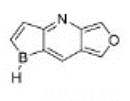
Correct option is B
Aromatic compounds
Aromatic compounds or arenes are organic compounds "with a chemistry typified by benzene" and "cyclically conjugated." Aromatic compounds are now defined as cyclic compounds satisfying Hückel's Rule.
In organic chemistry, Hückel's rule predicts that a planar ring molecule will have aromatic properties if it has 4 n + 2 π-electrons, where n is a non-negative integer. A cyclic ring molecule follows Hückel's rule when the number of its π-electrons equals 4n + 2, although clearcut examples are really only established for values of n = 0 up to about n = 6.
Criteria for simple aromatics are:
1. the molecule must have 4 n + 2 (a so-called "Hückel number") π electrons (2, 6, 10, ...) in a conjugated system of p orbitals (usually on sp2-hybridized atoms, but sometimes sp-hybridized);
2. the molecule must be (close to) planar (p orbitals must be roughly parallel and able to interact, implicit in the requirement for conjugation);
3. the molecule must be cyclic (as opposed to linear);
4. the molecule must have a continuous ring of p atomic orbitals (there cannot be any sp3 atoms in the ring, nor do exocyclic p orbitals count).
Antiaromatic compounds
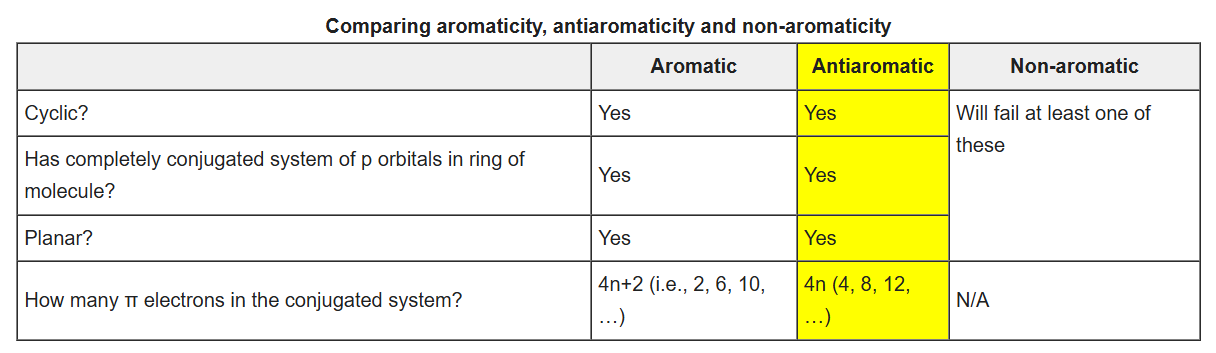
Antiaromaticity is a chemical property of a cyclic molecule with a π electron system that has higher energy, i.e., it is less stable due to the presence of 4n delocalised (π or lone pair) electrons in it, as opposed to aromaticity. Unlike aromatic compounds, which follow Hückel's rule ([4 n+2]π electrons) and are highly stable, antiaromatic compounds are highly unstable and highly reactive.
The term 'antiaromaticity' was first proposed as "a situation in which a cyclic delocalization of electrons is destabilising". The IUPAC criteria for antiaromaticity are as follows:
1. The molecule must be cyclic.
2. The molecule must be planar.
3. The molecule must have a complete conjugated π-electron system within the ring.
4. The molecule must have 4 n π-electrons where n is any integer within the conjugated π-system.
This differs from aromaticity only in the fourth criterion: aromatic molecules have 4 n +2 π-electrons in the conjugated π system and therefore follow Hückel’s rule. Non-aromatic molecules are either noncyclic, nonplanar, or do not have a complete conjugated π system within the ring.
Homoaromatic Compounds
Homoaromatic compound, which may be defined as a compound that contains one or more sp3 -hybridized carbon atoms in an otherwise conjugated cycle. In order for the orbitals to overlap most effectively so as to close a loop, the sp3 atoms are forced to lie almost vertically above the plane of the aromatic atoms.
The given compound contains 12 pi electrons. Hence, the compound is antiaromatic.


