






Correct option is B
Mischief is the offense 'A' has committed. Under Section 425 of the Indian Penal Code, mischief is defined as causing the destruction of property or any change in it, which diminishes its value or utility, with the intent to cause or knowing that it is likely to cause wrongful loss or damage to the public or to any person.
Explanation:
1.
Section 425: Defines mischief as causing the destruction or change of property with the intent to cause wrongful loss or damage.
2.
Intent: 'A' introduced water into the ice-house intending to cause wrongful loss to 'Z' by melting the ice.
3.
Wrongful Loss: The melting of ice caused by the introduction of water results in a diminished value of the ice, thereby causing wrongful loss to 'Z'.
Additional Information:
·
Criminal breach of trust (a): Involves the dishonest misappropriation or conversion of property entrusted to someone (Section 405 of IPC), not applicable in this scenario.
·
Extortion (c): Defined under Section 383 of the IPC, involves intentionally putting someone in fear of injury to induce them to deliver property or valuable security, not relevant here.
·
No offence (d): Incorrect, as the act of causing the ice to melt with wrongful intent constitutes mischief.
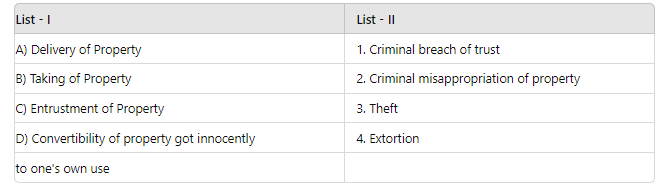 Codes :


