






Correct option is A
The correct answer is
(a) Mischief. According to
Section 425 of the Indian Penal Code (I.P.C.), mischief is defined as causing destruction or damage to any property with the intention of causing wrongful loss or damage to the public or any individual. In this scenario, 'A' deliberately sets fire to his own shop, which is insured, with the intent to claim insurance money. This act of intentionally destroying property to achieve a wrongful gain falls under the category of mischief.
·
Key Points about Mischief:
·
Intent: The primary element of mischief is the intention to cause wrongful loss or damage.
·
Destruction or Change: The offence of mischief involves causing destruction, damage, or any change in the property, rendering it less useful.
·
Property: The property damaged need not belong to another person; it can be the offender’s own property, especially in cases where there is an intention to cause wrongful loss to others, such as an insurance company.
Information Booster:
1. Mischief under Section 425 I.P.C. is a cognizable and bailable offence.
2. The punishment for mischief, as provided under Section 426 of the I.P.C., may extend up to three months of imprisonment, or fine, or both.
3. If the mischief involves causing damage to public property, the punishment can be more severe.
4. The act of arson, which involves setting fire to property, is a form of aggravated mischief and may be punishable under Sections 435 and 436 of the I.P.C.
5. Insurance fraud, such as in this case, where property is deliberately destroyed to claim insurance, can also lead to civil liabilities and penalties under insurance law.
6. A person committing mischief may also be liable for other criminal offences depending on the circumstances, such as attempting to cheat or commit fraud.
Additional Information:
·
Cheating (b): Cheating, defined under Section 415 of the I.P.C., involves deceiving someone to deliver property or money. Although 'A' may intend to cheat the insurance company, the primary offence committed here is mischief.
·
Extortion (c): Extortion, under Section 383 of the I.P.C., involves putting someone in fear of injury to obtain property or money. This does not apply to 'A's' actions.
·
None of the above (d): This option is incorrect because 'A' has clearly committed mischief by intentionally setting fire to his property.
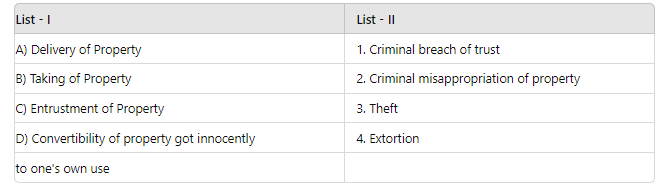 Codes :


